

-

 ClearanceWidth: W: 7.5″Length: L: 48"
HomeNow Laminate Flooring - Fresh Neutral
Anc-1096
$415 / sq ftRetail Price: $490 / sq ftUnit price /15% OFF -

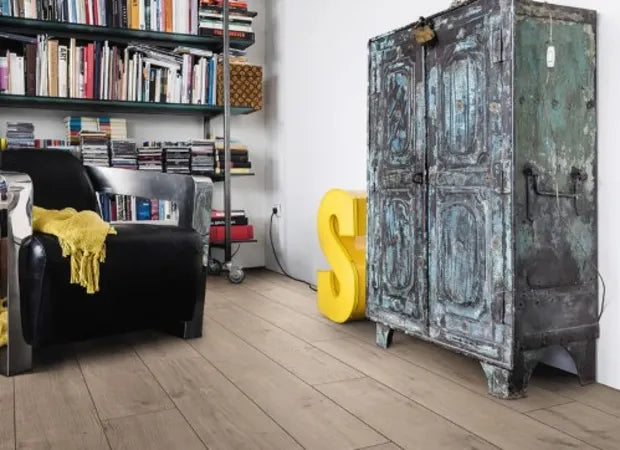 ClearanceWidth: W: 9.56″Length: L: 86.63"
HomeBase Laminate Flooring - Drift Ash
Anc-1046
$369 / sq ftRetail Price: $435 / sq ftUnit price /15% OFF -
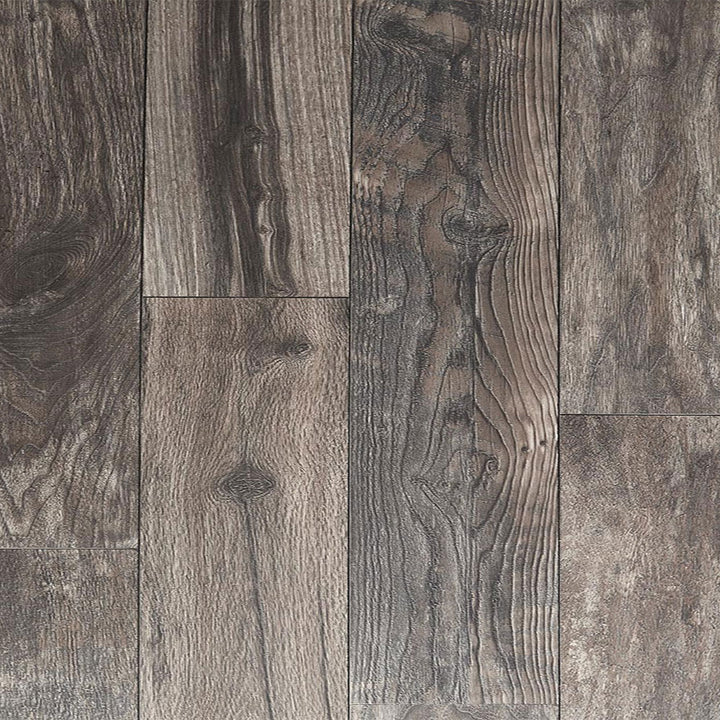 ClearanceWidth: W: 6.0″Length: L: 48"
FastTrack Laminate Flooring - Medium Brown
Anc-1129
$395 / sq ftRetail Price: $495 / sq ftUnit price /20% OFF


Frequently Asked Questions
What is the best flooring for a hallway or entryway?
Hallways and entryways are among the highest-traffic areas in any home and the first point of contact for dirt, moisture, and debris tracked in from outside. Durability and ease of cleaning are the top priorities. Tile, LVP, and hardwood are the most common choices. Tile is extremely durable and easy to clean but cold and hard underfoot. LVP handles moisture and heavy traffic well and is the most practical all-around choice for entryways. Hardwood adds warmth and character but requires more maintenance and moisture protection near exterior doors. Carpet is generally not recommended for entryways due to staining and moisture concerns.
What wear layer thickness do I need for entryway LVP?
For entryways and hallways, choose LVP with a minimum 12 mil wear layer -- the same spec recommended for households with pets and kids. If the entryway connects directly to an exterior door and sees heavy daily traffic, stepping up to a 20 mil wear layer is worth the investment. The wear layer is the most important spec for durability in high-traffic areas, and the entryway is typically the most worn spot in a home.
Should my hallway flooring match the rest of the house?
Matching or coordinating hallway flooring with adjacent rooms creates a cohesive flow that makes a home feel more spacious and intentional. Running the same floor continuously from the entryway through the hallway and into the main living areas is a design approach that works well in most homes. If matching exactly is not possible, choose a flooring that coordinates in tone and finish rather than contrasting sharply, which can make a home feel fragmented.
How do I protect entryway flooring from dirt and moisture?
Use an exterior mat outside the door to capture coarse debris and a quality interior mat inside the door to absorb remaining moisture and fine dirt. Both mats together significantly reduce the amount of soil and water that reaches the finished floor. Encourage a no-shoes policy if protecting the floor is a priority. For hardwood and laminate entryways, applying a waterproof transition strip at the door threshold and sealing the perimeter helps prevent moisture from working under the floor near the entry.
What flooring is easiest to clean in a high-traffic hallway?
Tile and LVP are the easiest hallway floors to clean. Both have smooth, sealed surfaces that can be swept and mopped without concern for moisture damage. LVP with a tight locking system and minimal texture is particularly low-maintenance. Hardwood requires more careful cleaning and is less tolerant of moisture from wet boots and umbrellas. Laminate in a hallway should always be a waterproof product given the moisture exposure near entry doors.