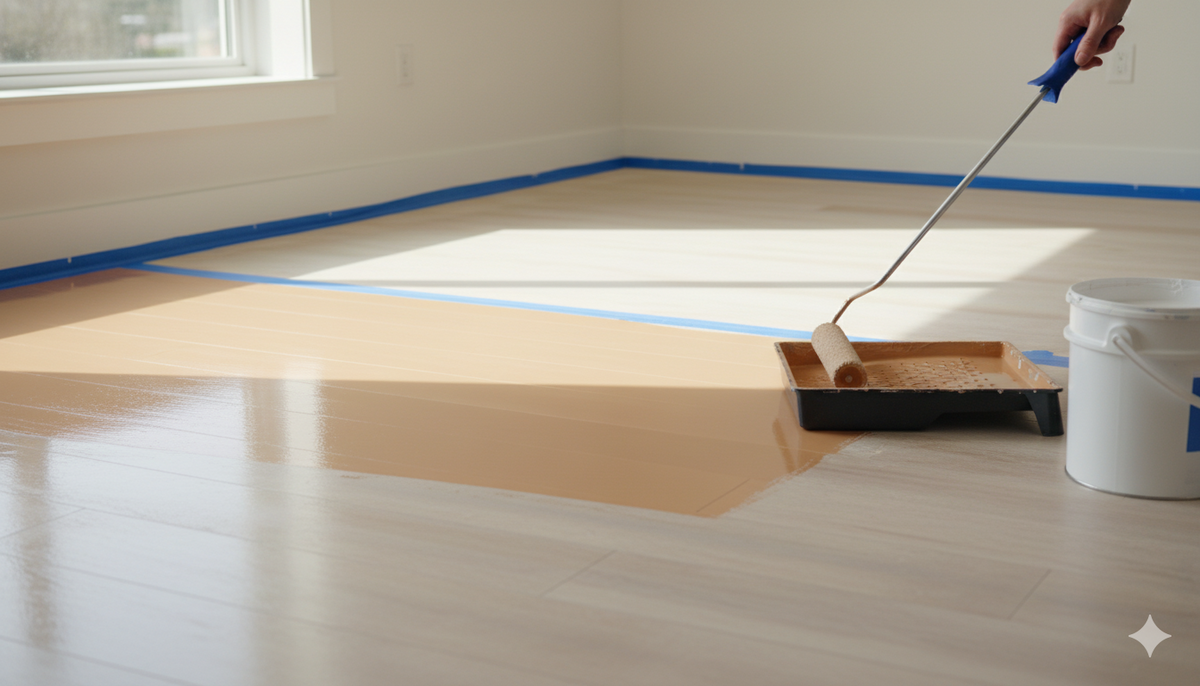
How to Paint a Vinyl Floor
|
|
Time to read 4 min

|
|
Time to read 4 min
While vinyl is a popular flooring option for many rooms in a house, its color can fade because of exposure to sun or normal wear. Fortunately, painting vinyl is a budget-friendly way of bringing your floor back to life. Whether you’re interested in changing the look of your vinyl floor or making your floor look like new, this helpful guide will walk you through the important information you need to know before you paint a vinyl floor.
Now you’re ready to remove the gloss on your vinyl floor. This is a key step in the process because it makes it easier for the new paint to adhere. Liquid deglosser is a powerful chemical, so make sure you take proper precautions when using it. You must wear eye protection and rubber gloves. Additionally, it’s important to ventilate the room with as much fresh air as possible. Use a clean cloth to apply the liquid deglosser to your vinyl floor, and then allow it to dry.
As you’re applying the liquid deglosser, be sure you begin at the wall or corner that’s opposite to the room entrance and work your way backwards. This will help you make sure you don’t literally paint yourself into a corner with no way out until the floor dries.
Once the liquid deglosser has dried completely, you’re ready to start preparing the room for paint. Either remove or apply blue painter’s tape to the baseboards along the wall to protect them from your floor paint. Keep in mind that even though you’ve used painter’s tape, you still need to go easy on the amount of paint used near the trim.
Use a small paintbrush to apply a 2- to 3-inch wide strip of primer next to the wall or baseboard. You can then use a larger brush or roller to apply a thin coat of primer to the rest of the floor. After the first coat of primer has dried, apply a second coat. Allow it time to dry as well.
Now you’re ready to apply your new coat of paint. As with applying the primer, use a small brush to cut in a band of floor paint at the wall or baseboard. Then use a large brush or roller to paint the remaining area of the floor. Allow to dry completely before applying a light second coat.
One nice aspect about painting your vinyl floor is that you can add a new pattern or design with a different color. If you decide to do this, wait until both coats of your base color have dried, and then apply the painter’s tape for your design. After you’ve taped your design, simply apply the other color where you want it, and allow it to dry. You’ll likely need to add a second coat of this paint as well.
Once the floor is dry enough to walk on, you can remove the painter’s tape, reattach the baseboards if needed, and enjoy the beauty of your vinyl floor with its new paint.
What Else Will You Need to Paint a Vinyl Floor?
To make your painting job as easy as possible, make sure you have the following accessories on hand before you begin:
It’s good to know some basics about what you’ll be working with before you begin painting your vinyl floor. Vinyl is a plastic material, and most paints aren’t formulated to adhere to something as smooth as plastic. As a result, you’ll need to purchase a paint specially designed for use on vinyl.
Paints that are formulated to adhere to vinyl are made with 100 percent acrylic or blends of urethane and acrylic resin. One quick and easy way to know if the color you’re interested in using will work on a vinyl floor is to look for it in exterior paint. This is because many paint companies will create these blends for exterior use on vinyl siding. You can also look for paint that’s labeled as floor or porch paint.
When you’re ready to give your vinyl floor a refreshed look, you can do so with paint. Use the information in this guide to make sure you follow the proper steps so you can enjoy your new floor color for years to come.


